
HARMA vs Slay the Spire: Which Deckbuilder Should You Play?
HARMA and Slay the Spire compared: attunement RNG, build depth, co-op, content, price and which game fits your playstyle.
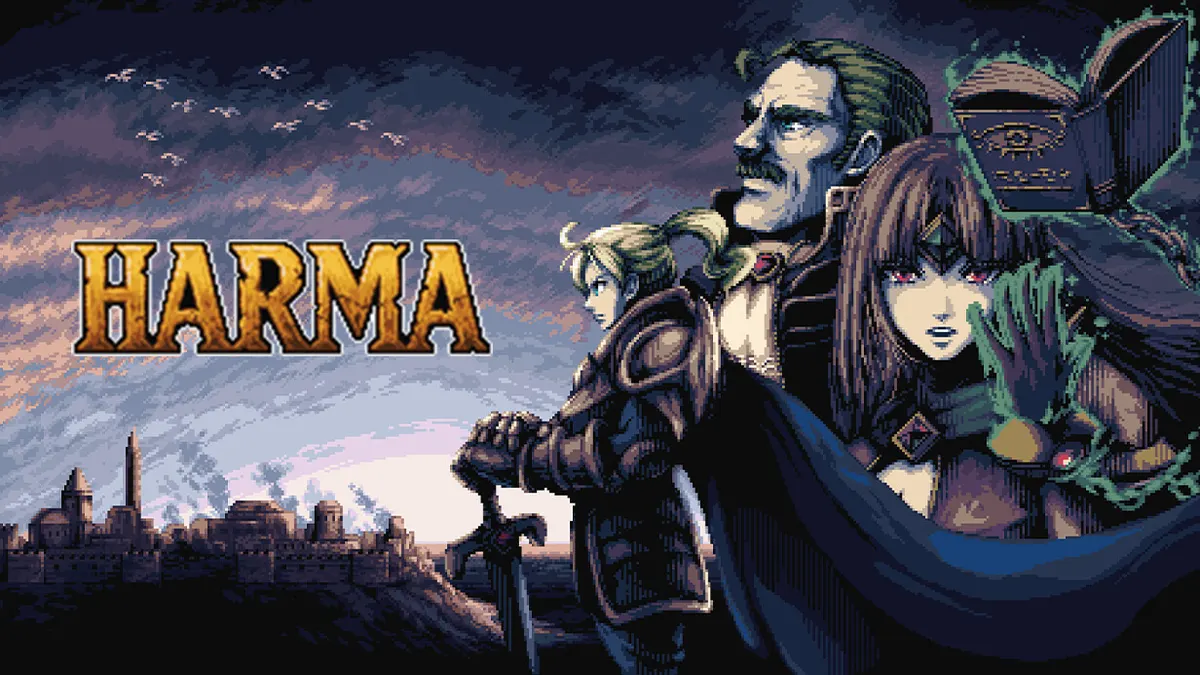
HARMA invites the comparison. It is a roguelike deckbuilder with a dark fantasy setting, a branching map, artifacts and a run-based structure. Slay the Spire is the genre's benchmark, and any new deckbuilder is measured against it. But the two games ask different questions. Slay the Spire is about deterministic optimization; HARMA is about managing probability. That difference shapes everything from card evaluation to how frustrating a loss feels. This comparison covers the mechanics, the content, the co-op and the value, so you can decide which one fits your time. If you are choosing HARMA, the beginner guide→ covers the first run.
The Core Difference: Certainty vs. Odds
In Slay the Spire, a card does what it says. If you pay 2 energy for 20 damage, you get 20 damage (barring modifiers). The skill is in deck construction, energy management and knowing the enemy patterns.
In HARMA, a card's tier depends on three artifact rolls. The same card can produce its minimum, middle or maximum effect, and a total failure returns it to your hand. You can spend Focus to force a success, but Focus is limited. The skill is in managing odds: raising success rates, choosing cards with usable low tiers, and spending Focus where it changes the outcome.
That makes HARMA more volatile. A bad roll can cost a fight that a Slay the Spire deck would have won. The compensation is the high-roll fantasy: a three-success turn with the right artifacts feels explosive in a way Slay the Spire rarely matches.
Build Depth
Slay the Spire has years of content and a mature meta. Its characters have deep card pools, relic synergies and solved archetypes. HARMA is in Early Access with 343 cards, 89 artifacts and 163 passives at launch, and the roadmap adds more. The four affinities (Burn, Fury, Frost, Crusade) are distinct, but the pool is smaller and the meta is still forming.
If you want a solved game with thousands of hours of community knowledge, Slay the Spire wins. If you want to explore a new system and help discover the meta, HARMA is more interesting.
Co-op
This is HARMA's biggest advantage. Slay the Spire is single-player (with a separate multiplayer mod/board game adaptation, not the same experience). HARMA supports online co-op for up to four players, with separate decks and a shared artifact setup. The coordination layer is real: you plan artifact loadouts, Mimic timing and boss roles together.
If you have a regular group, HARMA offers something Slay the Spire does not. If you prefer solo play, the advantage disappears.
Content and Price
| Category | HARMA | Slay the Spire |
|---|---|---|
| Status | Early Access | Finished |
| Price | $12.99 (launch discount $11.69) | Varies; often cheaper on sale |
| Cards | 343 at launch, more planned | Hundreds, plus years of updates |
| Co-op | Up to 4 players online | Single-player |
| Story | Story Mode planned, not at launch | Minimal framing |
| Art | Pixel art, dark fantasy | Stylized 2D |
HARMA is cheaper at launch but unfinished. Slay the Spire is complete and frequently discounted. If budget is the deciding factor, wait for a sale on either.
Difficulty and Frustration
Slay the Spire losses usually feel like a sequence of bad decisions. HARMA losses can feel like bad luck, especially when a key card fails three times in a row. The Focus system exists to soften that, but it does not eliminate variance. Players who hate losing to dice should think carefully; players who enjoy adapting to odds will find the system fresh.
The attunement guide→ explains how to reduce the frustration.
Presentation and Story
HARMA has a stronger narrative premise: a fallen kingdom, a missing father, a knight order that betrayed its own people. The pixel art is moody and cohesive. Slay the Spire is more abstract and gameplay-first; its lore is light. If story and atmosphere matter, HARMA has the edge, though its Story Mode is not playable yet.
The story explainer→ covers what is confirmed.
Which Should You Play?
Choose HARMA if:
- You want co-op in a deckbuilder.
- You like probability management and high-roll turns.
- You enjoy Early Access discovery and a dark fantasy mood.
- You are willing to tolerate balance changes and missing Story Mode.
Choose Slay the Spire if:
- You want a complete, polished, solved game.
- You prefer deterministic combat.
- You want the deepest solo deckbuilding available.
- You do not want to wait for content updates.
There is no wrong answer. They scratch different itches, and many players will keep both.
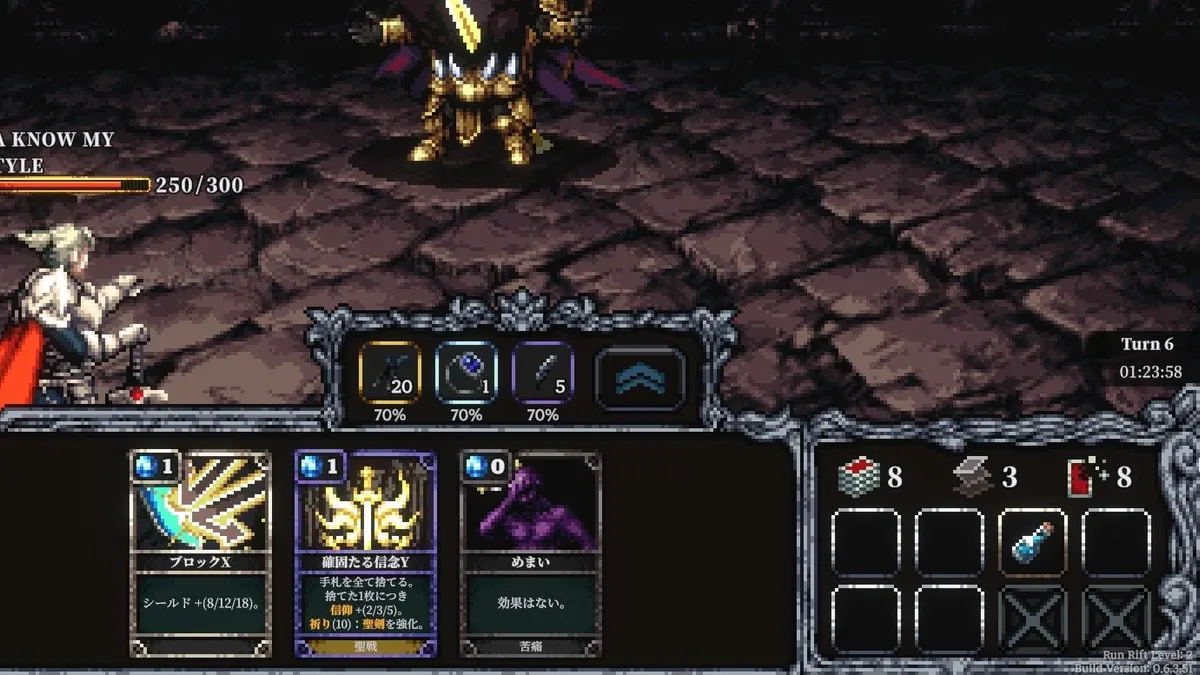
Read the boss intent before committing your burst; the opening turn decides the fight.
FAQ
Is HARMA a Slay the Spire clone? No. It shares the roguelike deckbuilder structure but the attunement system and co-op make it a different game.
Does HARMA have more content than Slay the Spire? Not yet. Slay the Spire has years of content; HARMA is in Early Access with a roadmap.
Is HARMA good for beginners? Yes, especially Crusade and Burn builds. The beginner guide→ covers the first run.
Official source: HARMA on Steam ↗
Sources
- HARMA on Steam ↗
- HARMA Steam news and patch notes ↗
- HARMA Early Access roadmap on Gematsu ↗
- HARMA launch report on AUTOMATON ↗