
HARMA First Three Hours: A Clean Opening Route
A spoiler-light route through your first HARMA runs: what to unlock, which fights to take, and how to spend early gold.
Your first three hours in HARMA should teach you two things: how to read an attunement line, and how to leave a run with something permanent. The game is happy to let you brute-force early Rift levels with random cards, then punish you at the first real boss. This route keeps the early climb boring on purpose so that your first wall is a lesson, not a wall of wasted unlocks. It assumes the Early Access launch build, where the Dimensional Rift→ is the main mode. For the spending decisions behind this route, see the gold and shops guide→.
Run 1: Learn the Table, Not the Meta
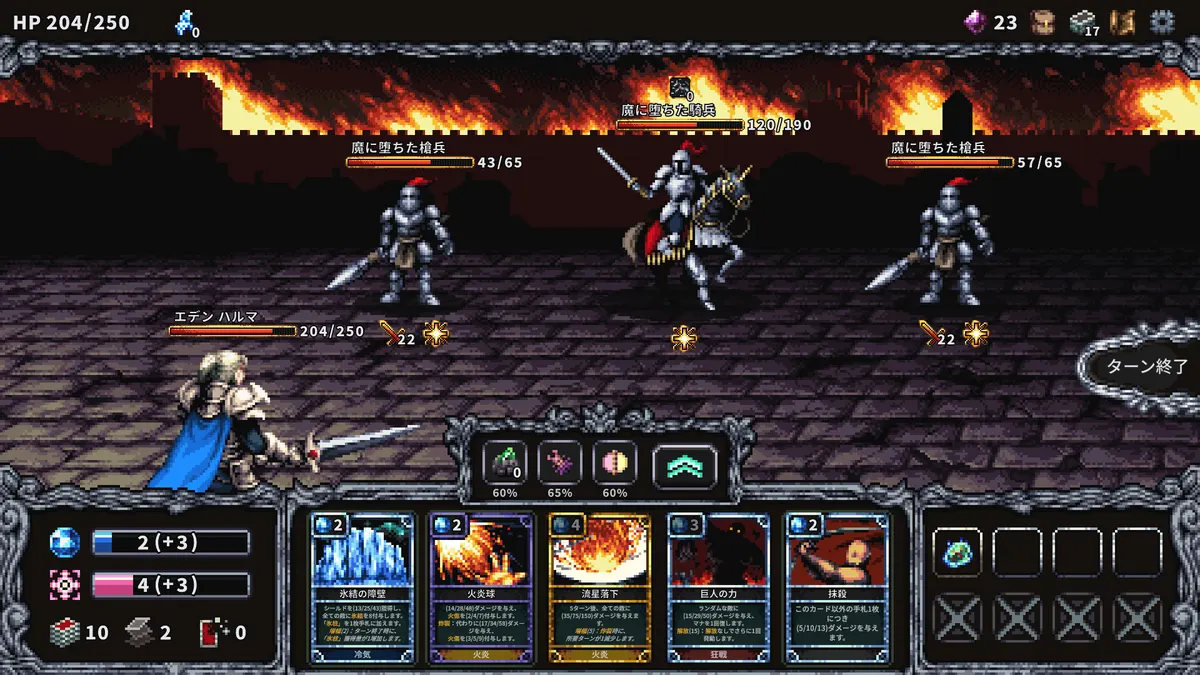
Pick Eden and take the default loadout. Your only goals are to play ten cards, watch how the three artifacts resolve, and reach the first boss. Do not reroll for a perfect start. Do not sell your starter artifact. Do not spend gold on a card you cannot explain in one sentence.
When a card fails all three attunements, pause and look at the percentages. Was the left artifact the low one? Did you need two successes for the line you wanted? That review is the actual tutorial. By the end of the run you should be able to predict whether a card is a 60 percent line or a 90 percent line before you click it.
Run 2: Commit to One Affinity
Eden's four lanes are Fire, Berserk, Frost and Crusade. Pick the one whose first two cards you understand, not the one a tier list told you is strongest. Fire wants Burn stacks and multi-target turns. Berserk wants Fury and controlled risk. Frost wants freeze setup and Cryoshatter payoffs. Crusade wants Faith and Divine Sword timing.
A focused deck lets you evaluate every reward against a clear question: does this make my lane better? A rainbow deck forces you to compare apples to oranges and usually ends with three half-finished engines. If you have no preference, Crusade is the most forgiving early because the Divine Sword gives you a free extra attacker while you learn.
Run 3: Push to the First Boss
The first chapter boss is Dual Head. Treat the fight as a mechanics exam, not a damage race. Check the Dual Head guide→ before you go in, but do not over-level for it. You want to see the attack pattern and learn which of your cards actually solves a boss turn.
If you lose, write down one sentence: "I died because ___." Common answers are "I had no block on the big turn," "I split my upgrades," or "I spent Focus on a hallway fight." Fix that one thing next run. Do not rebuild the entire plan.
Where to Spend Early Gold
Priorities, in order:
- Remove a dead starter. A card you never play is a tax on every draw.
- Upgrade your main attack. One reliable damage card carries the first chapter.
- Buy a consistency artifact. A rate booster or a defensive artifact beats a flashy legendary you cannot support.
- Buy a build-around card only if you already have its payoff.
The merchant is not a vending machine. Every purchase competes with removal, upgrades and the next artifact. The economy guide→ has the full opportunity-cost table.
A rare card with no support is worse than an uncommon card that fits your lane. Rarity describes scarcity, not synergy.
Altars: Take the Boring Choice
The Sun altar removes a card and gives a passive skill. The Moon altar heals or upgrades. In the first three hours, take removal when your deck has a clear dead card, and take the upgrade when your main attack is one tier short of a breakpoint. Healing is the fallback, not the default. You can often avoid damage by playing better, but you cannot undo a bloated deck.
What to Unlock First
Eden Growth is the permanent progression layer. Early points should go into the lane you actually play, not into a scattered collection of minor bonuses. Growth Level 5 and 10 are achievement milestones, but the real goal is making your next run start with a tool you understand. The Eden Growth guide→ explains the tiers and the SP choices.
Do not chase the Rift 15 clear immediately. Clear the lower levels, learn the boss order, and let your card pool fill in. The difficulty spike is real, and the game expects you to bring a coherent deck rather than a pile of good cards.
A Simple First-Session Checklist
- Reach the chapter 1 boss at least once.
- Win one run with a single-affinity deck.
- Remove at least two starter cards across your runs.
- Unlock one permanent bonus you can explain.
- Try one co-op match if a friend is online.
FAQ
Should I reroll my first run for a good artifact? No. Early runs are for learning the roll, and a strong artifact will not fix a deck you do not understand.
Is it bad to lose in the first three hours? No. Losing to Dual Head is the intended feedback loop. The information is worth more than the clear.
Do I need to play co-op early? No, but one match teaches you how shared artifacts change attunement. It is optional.
Official source: HARMA on Steam ↗
Sources
- HARMA on Steam ↗
- HARMA Steam news and patch notes ↗
- HARMA Early Access roadmap on Gematsu ↗
- HARMA launch report on AUTOMATON ↗