
HARMA Status Effects: Burn, Fury, Frost and Crusade
How Burn, Fury, Frost and Crusade work in HARMA, how they stack, and which builds each status supports.
HARMA's four affinities are not just card colors. Each one is a status engine with its own resource, payoff and failure mode. Fire applies Burn, Berserk builds Fury, Frost freezes and shatters, and Crusade accumulates Faith to summon and upgrade the Divine Sword. If you know which engine your deck is running, card rewards become obvious. If you do not, you end up with a pile of cards that almost combo. This page is the shared reference for all four builds; the individual build guides go deeper into card choices and boss plans. For the card-side setup, see the card upgrades guide→.
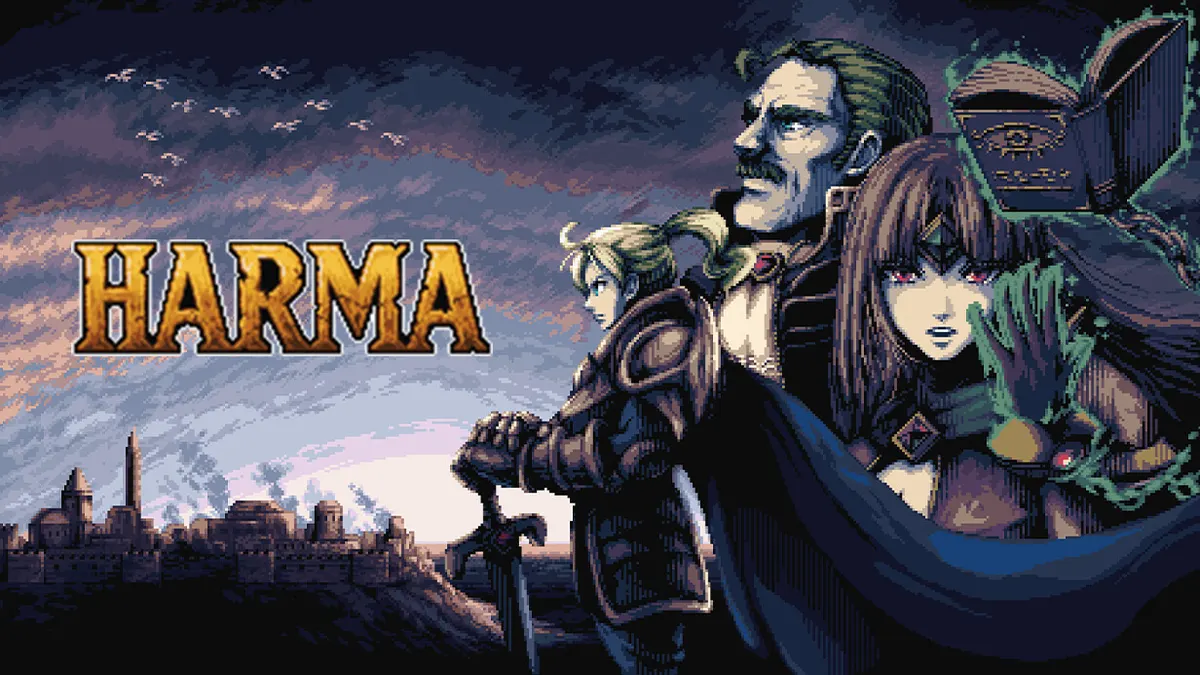
Burn: Damage Over Time That Rewards Setup
Burn is a stacking damage-over-time effect. The exact tick timing depends on the card and the current build, but the pattern is consistent: apply Burn early, then let the enemy's turn do the work while you block or apply more stacks. Burn builds care about multi-hit cards, AoE application and anything that extends or doubles the status. Eternal Flame, the legendary artifact, doubles Burn on all enemies, which is a build-defining payoff rather than a small bonus.
Burn is strongest against bosses with large HP pools and multiple adds, because the damage continues while you deal with mechanics. It is weakest against enemies that cleanse or die before the stacks matter. Do not over-invest in Burn if the current chapter is full of short fights.
Fury: Risk, Damage and the 50-Stack Achievement
Fury is Berserk's stacking attack steroid. You build it by playing Berserk cards and then convert it into damage. The appeal is snowballing: the longer the fight, the harder you hit. The risk is that Fury rewards aggression, and aggression loses to a bad boss turn. The 50 Fury achievement is a sign that the engine is meant to reach high stacks in a single fight, not just tick along at five.
Play Fury decks with a clear defensive plan. A Fury stack means nothing if you die before spending it. Keep one block card or a defensive artifact in the deck, and do not treat every turn as a damage turn.
Frost: Freeze, Then Shatter
Frost applies freeze or chill effects, then converts that setup into Cryoshatter damage. The one-turn, three-Cryoshatter achievement is the clearest expression of the lane: set up multiple frozen targets, then break them in a single explosive turn. Frost is the most control-oriented affinity because freeze can deny an enemy action, but the payoff requires sequencing.
The mistake is treating Frost as pure defense. Freeze is temporary; if you never shatter, you are delaying the fight, not winning it. Build enough shatter payoffs to convert the control into damage, and save the big turn for a boss phase or an elite.
Crusade: Faith and the Divine Sword
Crusade is the most structured of the four. The first Crusade card you play in a fight summons a 0-cost Divine Sword into your hand. Subsequent Crusade cards build Faith, and once you reach the threshold, the right card can summon the sword again. You can spend Faith to upgrade the sword: more damage, a shield, an AoE attack, or a version that returns to your deck instead of disappearing.
Crusade is forgiving because the sword gives you a free extra action while you learn the fight. It is also scalable: the more upgrades you invest, the lower the sword's cost and the more powerful its effect. The Crusade build guide→ covers the upgrade order and the boss matchups.
Splitting Burn and Frost can work if you have a specific bridge card, but a beginner deck should commit to one status engine and one payoff.
How the Statuses Interact
| Status | Resource | Main payoff | Best against | Main risk |
|---|---|---|---|---|
| Burn | Burn stacks | Damage over time, Eternal Flame doubling | High-HP bosses, multi-enemy fights | Short fights, cleansing |
| Fury | Fury stacks | Attack scaling | Long boss fights | Dying before spending stacks |
| Frost | Freeze / Cryoshatter | Control and burst | Dangerous single targets | Delaying without a payoff |
| Crusade | Faith / Divine Sword | Free summons and upgrades | Most bosses, co-op | Over-investing in one sword |
Some cards have dual affinity, which lets them bridge two engines. Treat those as support, not as permission to build both lanes from scratch. A dual card is strongest when one of its affinities is already your main plan.
Reading Enemy Intent
Enemies display their next action under their feet. That information is part of every status decision. If the enemy is about to attack for a large amount, a freeze or a block turn is worth more than another Burn stack. If the enemy is buffing or summoning, apply pressure now and save the defensive turn for later. Status builds are not autopilot; they are about matching the engine to the incoming turn.
FAQ
Can Burn and Frost be played together? Yes, but you need a card that bridges them. A pure split usually produces two weak engines instead of one strong one.
Does Fury reset between fights? Fury is a combat resource; assume it resets when the fight ends unless a card or relic explicitly says otherwise.
Is Crusade the best beginner affinity? It is the most forgiving because the Divine Sword gives you extra actions, but the best lane is the one whose payoff you understand.
Official source: HARMA on Steam ↗
Sources
- HARMA on Steam ↗
- HARMA Steam news and patch notes ↗
- HARMA Early Access roadmap on Gematsu ↗
- HARMA launch report on AUTOMATON ↗