
7 HARMA Deck-Building Mistakes to Stop Making
Seven common HARMA deck-building mistakes, from ignoring attunement odds to over-upgrading, and how to fix each one.
Most HARMA losses are not caused by a missing legendary. They come from a handful of deck-building habits that feel correct in the moment and compound over a run. The game's attunement system punishes bloated decks, split engines and greedy upgrades more than it punishes low rarity. Here are the seven mistakes I see most often, and the fix for each. If you are still learning the table, read the beginner guide→ first so the terms make sense. For the upgrade decisions behind these fixes, see the card upgrades guide→.
1. Building It Like Slay the Spire
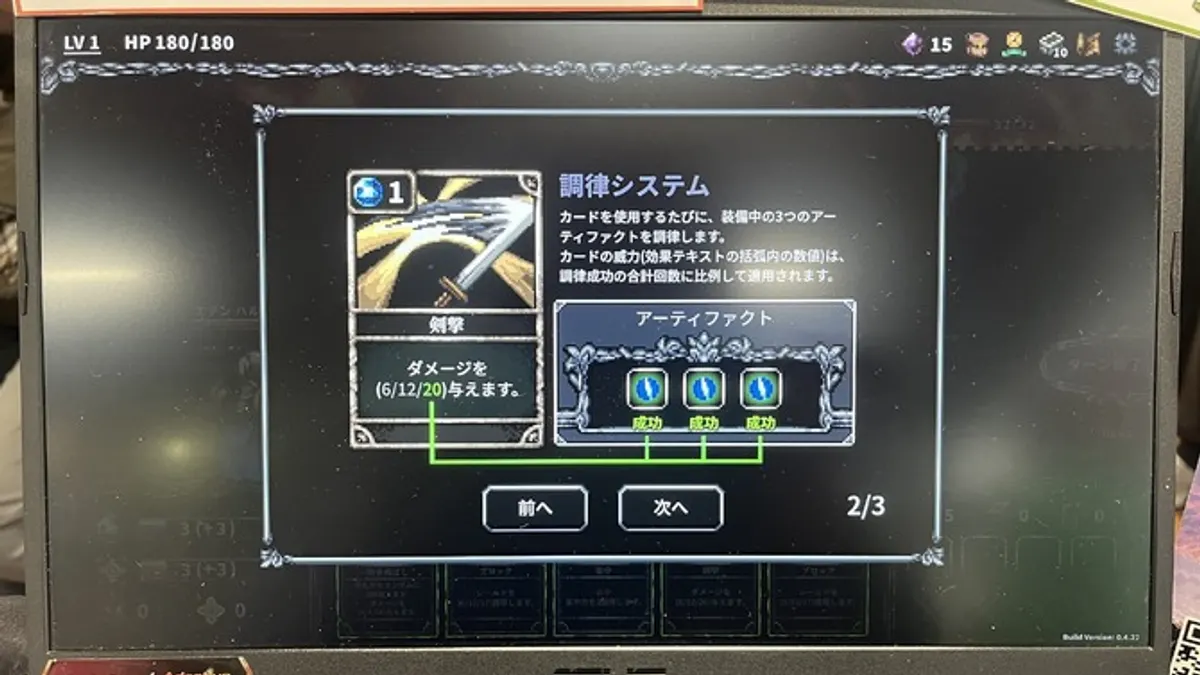
HARMA looks like a Slay the Spire-style deckbuilder, but the card resolution is different. In Slay the Spire, a card does what it says once you pay for it. In HARMA, the card's tier depends on three artifact rolls. That means card quality is not just energy efficiency; it is also reliability. A 3-cost card with a huge maximum but a low success rate is not automatically a good card. Ask what the card does at the tier you will actually hit.
The fix: evaluate every card at one, two and three successes. If the one-success tier is unusable, the card needs high rates or Focus support to justify its slot.
2. Ignoring Attunement Odds
Players fall in love with the maximum bracket and ignore the percentages above the artifacts. A 20-damage ceiling means nothing if the line usually produces 8. The middle tier is the tier you should plan around. The attunement guide→ explains the distribution and how artifact order changes it.
The fix: before adding a card, ask which tier solves your current problem and whether your artifacts can reach it reliably.
3. Splitting Across Three Affinities
A Burn card here, a Frost card there, and a Crusade card because it looked strong. The result is three engines with no payoffs. HARMA rewards commitment because statuses stack and payoffs scale. A mono-affinity deck with average cards usually beats a rainbow deck with good cards.
The fix: pick one lane by the end of chapter 1. Treat off-lane cards as support only if they directly enable your main engine.
4. Removing Too Much
Thin decks are powerful, but a 12-card deck with no block is a death sentence. Removal is not free; every removed card is one less answer in a future hand. The 12-card achievement tempts players into over-cutting before they understand which cards are load-bearing.
The fix: remove cards that do nothing, not cards that are merely replaceable. Keep enough playables to survive a bad draw.
5. Hoarding Focus Forever
Focus is insurance, and unused Focus carries over. That makes it tempting to save every point for the final boss. But a Focus spent to prevent a 20-damage hit in chapter 2 saves more HP than a Focus saved for a boss you may never reach.
The fix: spend Focus when it converts a loss into a win or prevents a large HP loss. Bank the rest.
The best Focus use turns a near-miss into the tier you need. If it does not change the result, save it.
6. Upgrading Everything Once
A deck where every card has a minor upgrade is weaker than a deck with two or three key upgrades. Upgrades compete for gold, and spreading them thin means your main attack is still one damage short of a breakpoint. The card upgrade guide→ explains X/Y branches and fusion.
The fix: upgrade the cards you play most, and skip the cards you play once per run.
7. Buying Cards Instead of Answers
The merchant sells excitement. Your deck needs answers: block for the big turn, draw for the empty hand, removal for the dead starter. A new card that does not answer a problem is clutter. The economy guide→ ranks purchases by consistency.
The fix: before buying, name the problem the card solves. If you cannot name it, do not buy it.
The Underlying Habit
All seven mistakes share one cause: evaluating a card in isolation instead of in the context of the next fight. HARMA is a game about converting probabilities into reliable outcomes. Every deck slot should either improve your odds, protect you when the odds fail, or pay off when they succeed. If a card does none of those, it is not a card; it is a delay.
A Quick Audit Before a Boss
- Can I reach my main card's two-success tier reliably?
- Do I have a defensive answer for the boss's biggest turn?
- Is every card in the deck either core, support or a necessary answer?
- Have I spent my Focus on something that mattered?
- Is my gold going toward a breakpoint or a new toy?
FAQ
Is a thin deck always better? No. Thin decks are consistent but fragile. Keep enough block and utility to survive bad draws.
Should I ever play two affinities? Yes, with a bridge card or a clear split plan. The mistake is splitting without a payoff, not splitting itself.
How many upgrades should I have before the first boss? Two or three meaningful upgrades are usually enough. Spread thinner and you weaken your core.
Official source: HARMA on Steam ↗
Sources
- HARMA on Steam ↗
- HARMA Steam news and patch notes ↗
- HARMA Early Access roadmap on Gematsu ↗
- HARMA launch report on AUTOMATON ↗