
HARMA Beginner Guide: Attunement, Focus and Your First Run
A practical HARMA beginner guide: how three-artifact attunement works, when to spend Focus, and what to prioritize in your first runs.
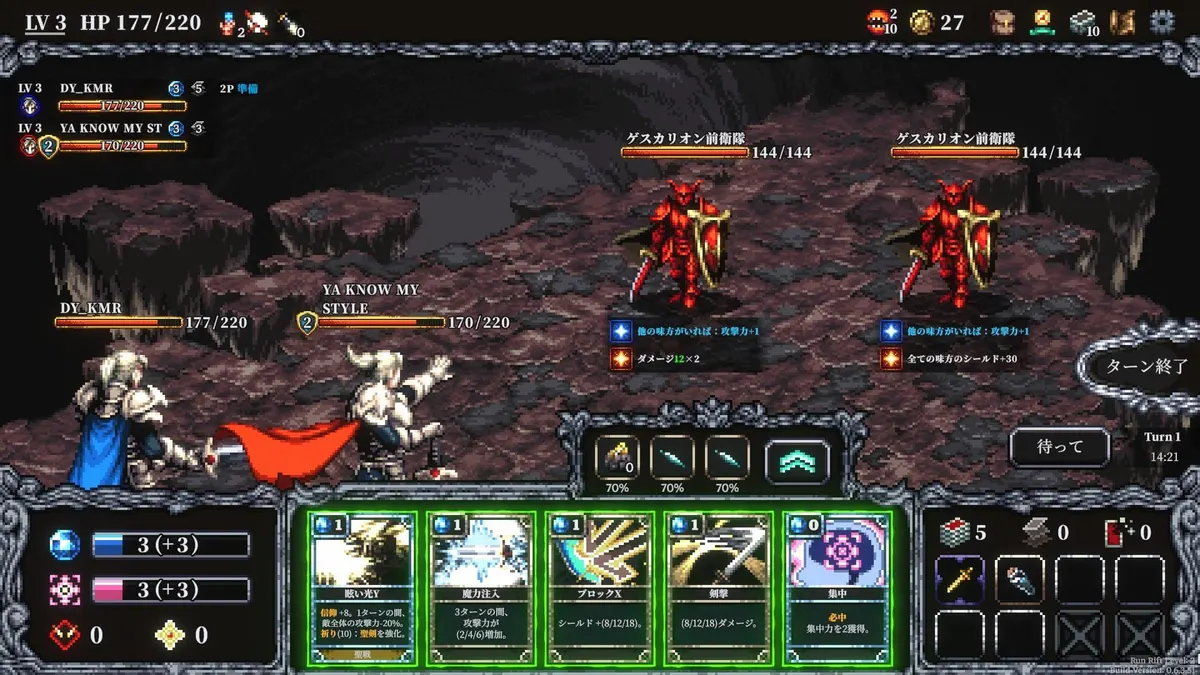
HARMA is not a deckbuilder where the card does what the card says. Every attack, block and utility card is resolved through three equipped artifacts, and each artifact rolls its own success chance. The card text shows three damage or block values in brackets; the number of successful attunements decides which one you get. If all three fail, the card is not played and returns to your hand. That single rule changes how you build, when you attack and why a "bad" card can still be correct. Start with the attunement system→, then use this page to turn it into a first run that actually reaches a boss. If you want the exact numbers behind those rolls, the attunement and Focus guide→ breaks down the odds.
What Kind of Game HARMA Is
HARMA is a retro dark fantasy roguelike deckbuilder from IndirectShine, published by Astrolabe Games. Early Access launched on November 16, 2026. The launch build centers on the Dimensional Rift, a four-chapter run with branching map nodes and one boss per chapter. A separate Story Mode is on the roadmap but is not part of the launch build, so do not expect a finished four-act campaign yet.
You control Prince Eden Harma, with Habena Belua planned as the second playable character. Runs are built from cards, artifacts, passive skills and permanent Eden Growth unlocks. The aesthetic is pixel art and oppressive fantasy, but the decision layer is closer to a probability puzzle than a pure power fantasy. You are constantly asking whether a line is worth the chance of wasting the card.
The Three-Artifact Roll in Plain English
Each card displays three numbers, usually in parentheses or brackets. Those correspond to one, two or three successful attunements. A card that shows 8 / 12 / 18 deals 8 damage if one artifact succeeds, 12 if two succeed, and 18 if all three succeed. If none succeed, the card returns to your hand and you spend the action without resolving the card; it simply returns to your hand. The exact feedback matters because it teaches you to read risk before committing.
Each artifact has its own displayed success rate. The baseline is around 65 percent, but artifacts can modify that number. Broken Sword, for example, lowers the rate to 55 percent while granting a large attack bonus. The rolls are independent, so three 65 percent artifacts do not guarantee two successes. They give you a spread: sometimes zero, often one or two, occasionally three.
A card with a huge three-success payoff is not automatically better. Ask how often you get two successes, because that is the middle of the distribution and the result you will see most turns.
Focus Is Your Emergency Brake
Focus is the resource that makes HARMA feel tactical rather than merely random. Spend one Focus to force a single artifact's attunement to succeed. You can use it on the artifact with the most important effect, or on the third slot to push a card from two successes to three. Focus refills over the course of a run and unused Focus carries forward, so banking one for a boss turn is usually correct.
The beginner mistake is treating Focus as a damage cooldown. It is better understood as insurance against a line collapsing. If a card would kill an enemy at two successes and you already have one success, forcing the second is a clean trade. If you are fishing for a perfect three-success highlight, you are probably overpaying.
Your First Run Priorities
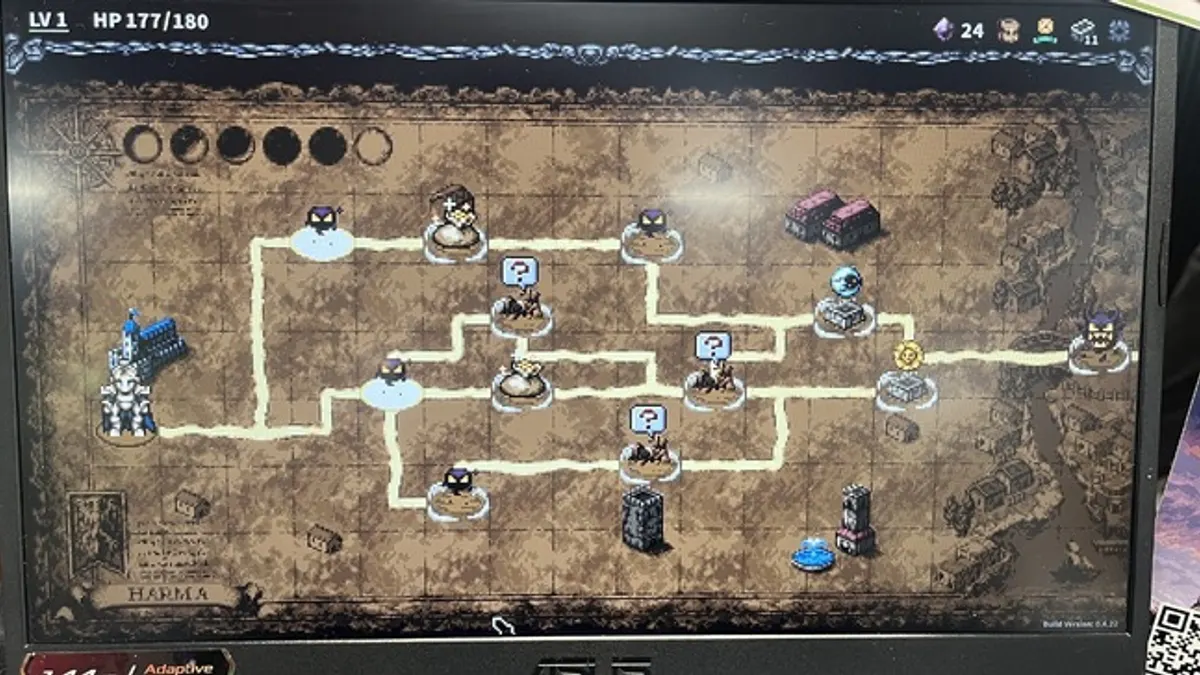
First, learn the map. Nodes include normal battles, elites, merchants, events, rest sites, the Alchemist and the Sun and Moon altars. The Sun altar removes a card and grants a passive skill; the Moon altar heals or upgrades a card. Do not skip every altar because you are afraid of deck thinning. Removing a starter card is often worth more than a random relic.
Second, pick one affinity and commit. Eden's cards revolve around Fire (Burn), Berserk (Fury), Frost (freeze and Cryoshatter) and Crusade (Faith and Divine Sword). Splitting across three affinities early gives you a pile of cards that do not reinforce each other. A focused deck with mediocre cards beats a rainbow deck with good cards because the payoffs stack.
Third, spend gold with a plan. Merchants sell cards, artifacts and removal services. Buying a shiny card you cannot upgrade is usually worse than removing a dead starter or upgrading your main attack. The gold and shop guide→ breaks down the opportunity costs.
What to Ignore Until Later
Do not chase the 12-card achievement on your first run. Do not force a Perfect Attunement achievement. Do not assume every elite is worth fighting. And do not read Story Mode theories as if the campaign is already playable. The launch build is a Rift game; learn its combat loop first.
FAQ
Does a failed attunement waste the card? The card returns to your hand, so you do not lose it permanently, but you lose the action and any energy committed to it. That is why low-probability attacks are expensive even when the card looks strong.
Should I always use Focus on the first artifact? No. Use it on the artifact whose effect matters for the current line, or on the last roll needed to reach a breakpoint. Position and card order matter as much as the raw percentage.
Can I play HARMA without the Dimensional Rift? At Early Access launch, the Rift is the main playable mode. Story Mode is a later roadmap addition, so the campaign structure is not yet available.
Official source: HARMA on Steam ↗
Sources
- HARMA on Steam ↗
- HARMA Steam news and patch notes ↗
- HARMA Early Access roadmap on Gematsu ↗
- HARMA launch report on AUTOMATON ↗